
Technical Analysis
We help communities understand what is getting in the way of new housing and what they can do about it.
Our goal is to help foster neighborhoods that the whole community is proud of, with housing options that are accessible to a wide range of households. We do this using a wide range of tools.
Housing Needs Assessment, Public Property Analysis, Vacant Parcel Analysis, Development Opportunity Analysis, Zoning and Policy Audits, Long-Term Growth Strategy, Corridor Studies, Neighborhood Pattern Analysis
Pair any of the above with our Community Engagement Workshops, Education & Training, or Communications Support.
Vacant Parcel Analysis
See how zoning affects what can be built
We look at vacant land, zoning rules, and current real estate data to show what kinds of homes can be built, what they are likely to cost, and what local households can afford.
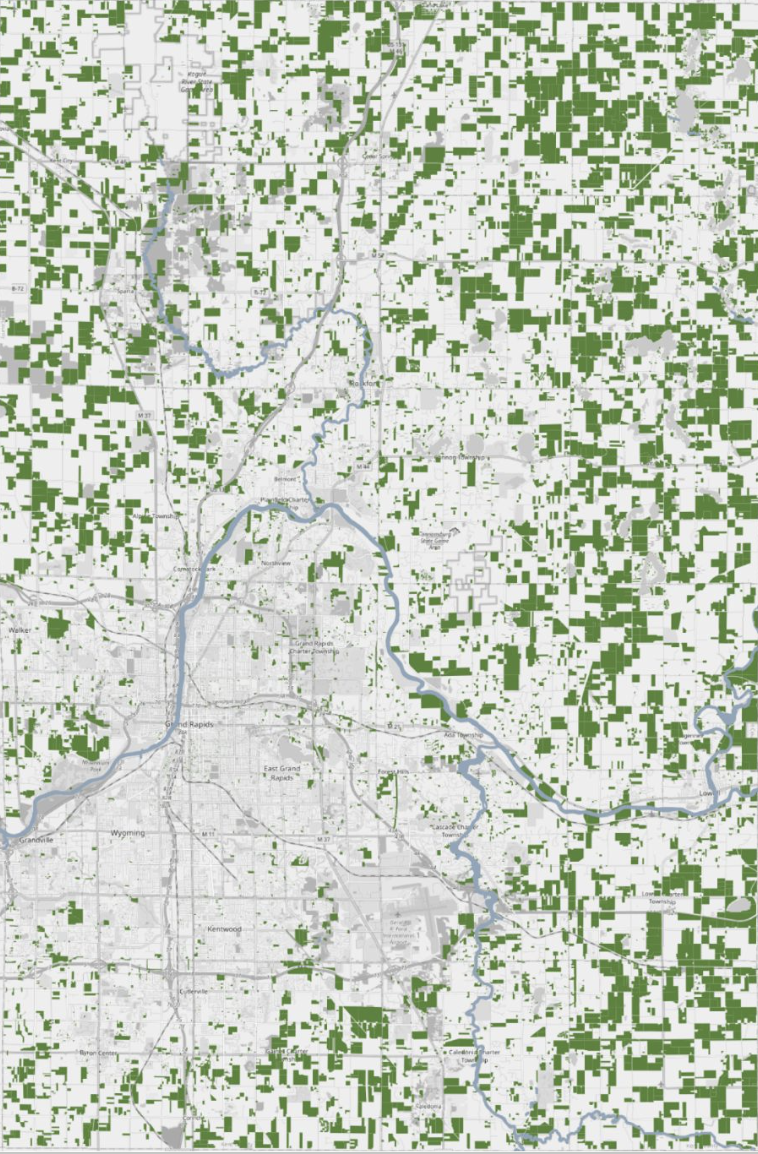
Seeing the Implications of Zoning in Kent County.
Of the existing vacant residential lots, all but 2.2% are zoned exclusively for single family homes on large lots. The typical single family home must be built on 1.5+ acres and sells for $456,000.Meanwhile, the typical household in the county only earns enough to afford a $242,000 mortgage.Value per Acre Analysis
See how different patterns of development affect local revenue
We measure how much property tax revenue different types of development generate per acre.
This helps communities see which development patterns make the best use of land and infrastructure.
In Kent County, dense mixed-use developments generate up to 10x more revenue per acre than single-family subdivisions, highlighting the fiscal benefits of compact growth.
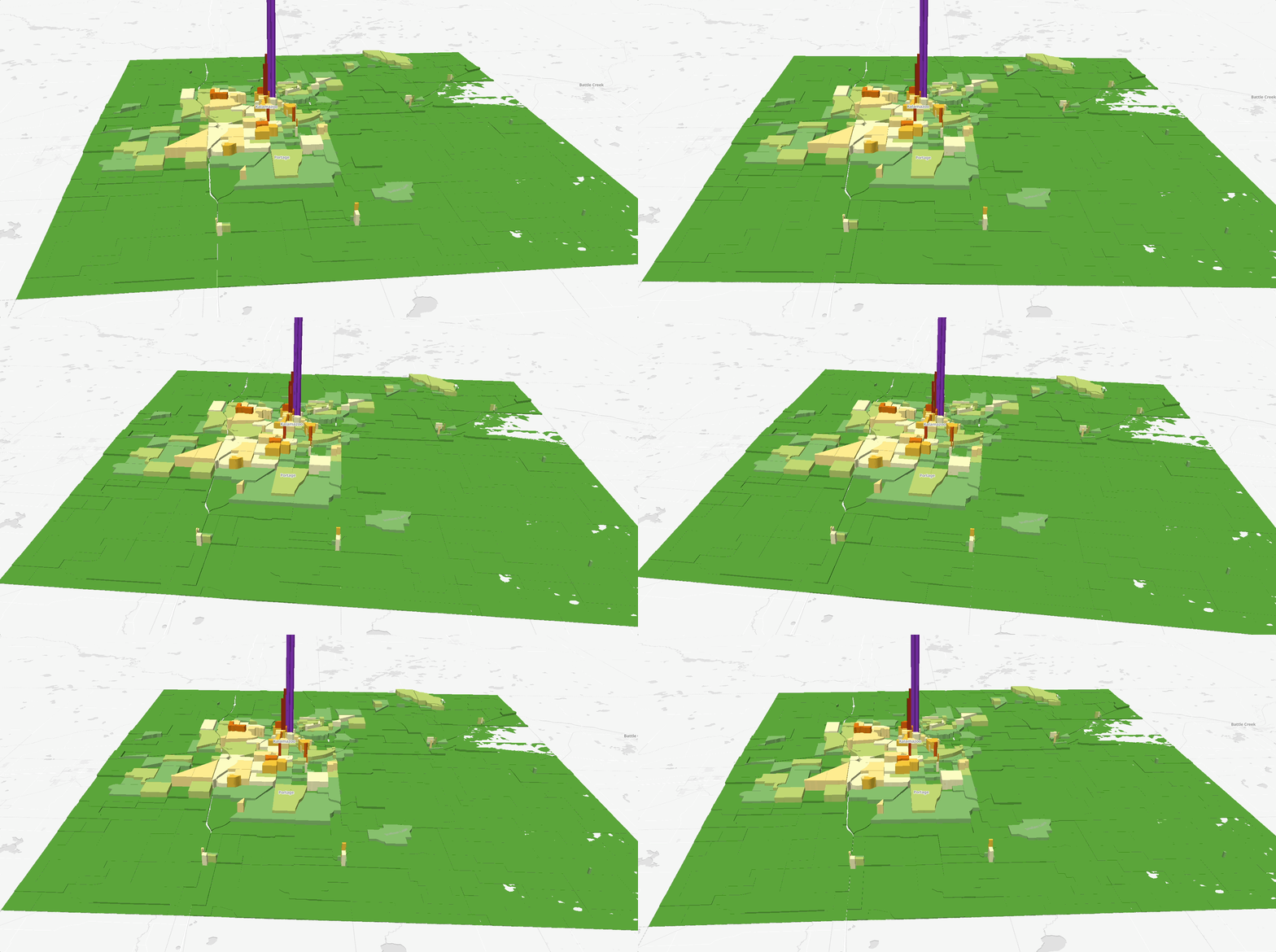
What zoning means in Kalamazoo County
This map shows where land is generating more or less value per acre; it helps local leaders compare development patterns and understand the financial impact of how land is used.Let’s Get to the Bottom of It
See Where Housing Gets Stuck.
Most housing analyses look at one piece of the problem. We look at the whole system: policy, financing, development, and construction. That helps you see exactly where housing is getting stuck and what needs to change.