
How to make the math work. Housing 202 Workshop
This session is focused on real-life project examples that range from small-scale infill projects, to complex multi-family developments, to clusters of starter homes. We want your team to understand how these options are typically financed, where the roadblocks likely stand, and how to clear those hurdles in a financially sustainable and replicable way.
Pricing and Timing: From $7,500, 6-week lead time
Understand the Numbers
It’s the right fit…
For these roles:
City managers, planning staff, economic development professionals, chambers of commerce, philanthropic partners, elected officials, and local committee members.
Coalitions of nonprofits, cities, and funders coming together on regional housing
Community foundations with active housing portfolios
Chambers of commerce leading housing or workforce initiatives
Elected officials, planning commissioners, and municipal staff with housing mandates
Developers and community advocates
With these conditions:
Basic design elements to reduce the cost of housing without sacrificing quality
Leveraging traditional equity and debt
Seeking financing from state and federal resources
How to apply local tax incentives and abatements to housing.
Learn by doing, not just listening.
Every session is designed around real challenges your community faces. We use your actual projects, policies, and political dynamics as case studies. Participants leave with frameworks they can apply immediately and confidence they can sustain long after we’re gone.
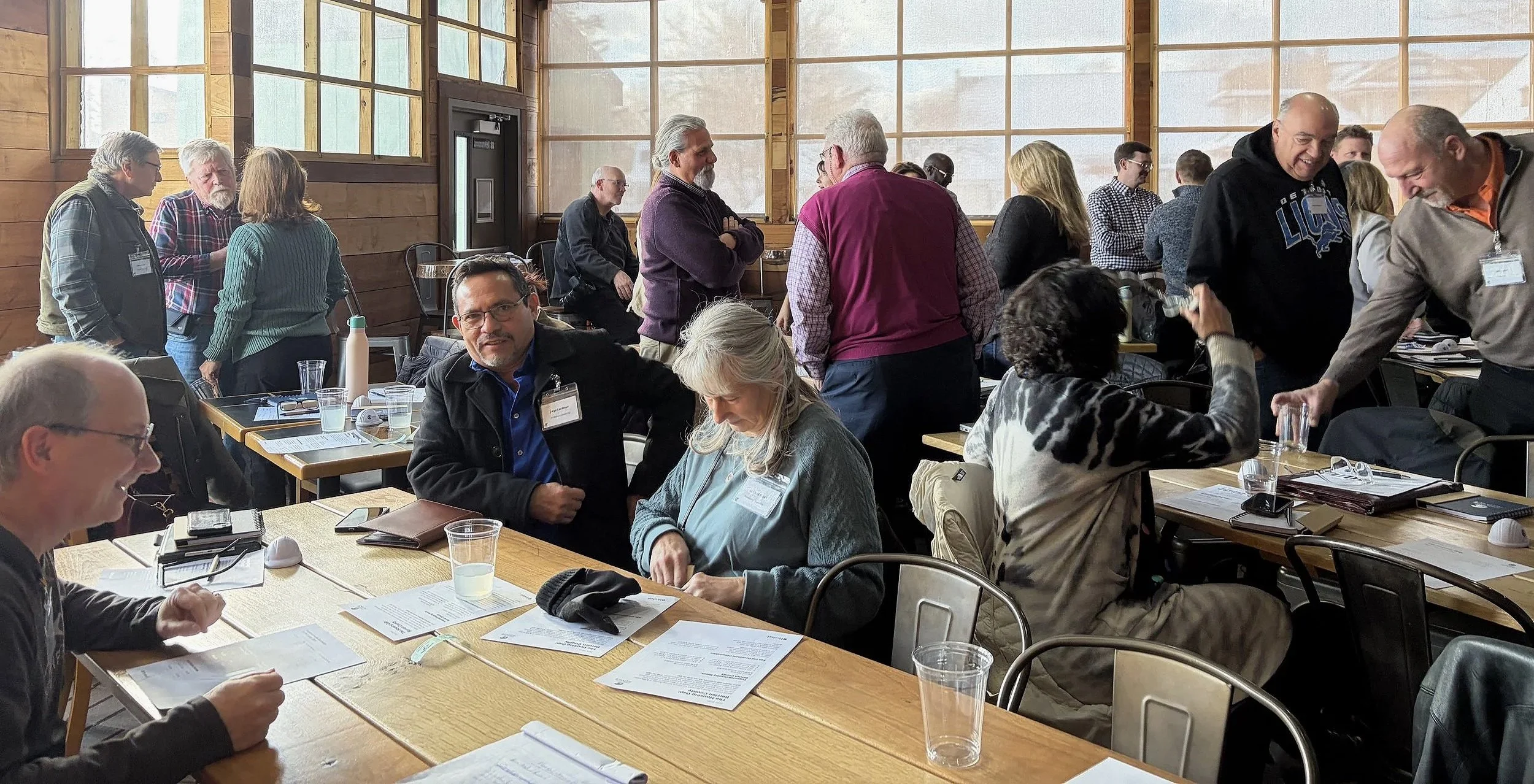
Our workshops are interactive, collaborative, and practical. We facilitate working sessions where your team grapples with real decisions, tests strategies, and builds alignment around a shared vision.
What You Get1-hour pre-workshop planning call
Optional pre-workshop participant survey—recommended for groups over 25
Half-day facilitated workshop with custom materials
30-day follow-up coaching call
InvestmentFrom $7,500 (half day)
6-week lead time
How It Works
-
We’ll meet virtually to understand the coalition, the stakes, the friction, and the desired outcome. If we're not the right move, we say so on the call.
-
We send a written proposal with format, attendance target, and fixed price. Contract plus 40% deposit to lock the date.
-
Our team customizes the agenda based on a shared understanding of the audience and key outcomes.
-
Flywheel leads the session. Participants leave with shared understanding of what levers your community can pull to impact affordability.
-
A 30-minute coaching call with the convener 30 days later to review what's moved, what hasn't, and what's next.
Common Questions
-
Ideal is 20–40 people representing the full decision-making geometry — cities, counties, CDCs, funders, builders, employers. Under 15 and you're missing voices; over 50 and dynamics shift. We've run sessions as small as 12 and as large as 65.
-
The full-day format is designed for in-person. Interactive exercises don't translate well to video. We can run a half-day virtual adaptation for $12,000 when in-person isn't feasible, but the outcomes are meaningfully weaker.
-
This is common — and often exactly why the workshop works. The pre-workshop planning sessions surface the conflict honestly. The workshop gives the room a structured way to work through it instead of around it. We don't pretend conflict doesn't exist.
-
Three things, reliably: shared language (everyone leaves with the same vocabulary), shared facts (the data brief becomes a reference document), and shared 30-day commitments (explicit, in writing, named owners). Anything more — a funded initiative, a new policy, a capital campaign — depends on what your coalition does with those three things.
-
No. Regional workshops are almost always multi-stakeholder (10+ orgs); city-level workshops are usually single-organization (department leads, council, advisory board). Both formats exist — the pre-call determines which is right.
-
Yes. The default framing is 'housing system' because that's how most regional coalitions think. We also deliver topic-specific versions — zoning reset, financing reset, engagement reset — for organizations with a narrower scope. Same price structure.
“Flywheel helped us see opportunities we didn’t know existed. Their ability to connect policy, financing, and community vision gave us the confidence to move forward on projects that seemed impossible before. They don’t just give you a plan — they help you build the momentum to actually make it happen.”
- Mason County Chamber of Commerce / The Right PlaceHousing 202 Workshop
Great neighborhoods aren’t built by consultants — they’re built by capable local leaders who understand how their decisions compound over time.
Our workshops, seminars and bootcamps equip your staff, elected officials, and community stakeholders with the knowledge and tools to create lasting momentum. Whether you need a half-day introduction, or a multi-day intensive, we meet your team where they are and give them what they need to succeed.